Low-Carbon Hydrogen Optimization Model
Mar 11, 2026
·
1 min read
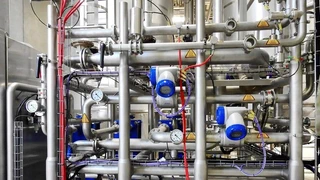
The optimization model behind How Carbon Accounting Rules Shape Incentives for Hydrogen Production, released for reproduction and extensions. Written in Python as Jupyter notebooks, it simulates and optimizes (via Gurobi) the operation and capacity choice of Power-to-Gas systems and renewables under alternative carbon accounting rules.

Authors
Researcher
I am a researcher at the Mannheim Institute for Sustainable Energy Studies
(MISES) at the University of Mannheim. I combine economic analysis with
carbon accounting to study the economics of decarbonization technologies,
emission allocation effects and the investment incentives it shapes. I have held visiting positions at the Stanford
Graduate School of Business and the Toulouse School of Management. My
research has been published in Energy & Environmental Science and Nature
Communications.